Multilayer Sunflower Papercut File Evaluation
The digital crafting landscape has evolved significantly, offering creators precise tools to replicate complex designs across various mediums. Among the most popular assets for enthusiasts of papercutting and laser engraving is the Multilayer Sunflower Papercut File. This specific digital asset, often referenced alongside its 7-layer variant, provides a structured approach to creating depth and dimension in floral art. Whether you are utilizing a Cricut machine, a Silhouette Cameo, or a CNC router, understanding the capabilities and limitations of this file type is essential before making a purchase decision.
Understanding the Digital Asset
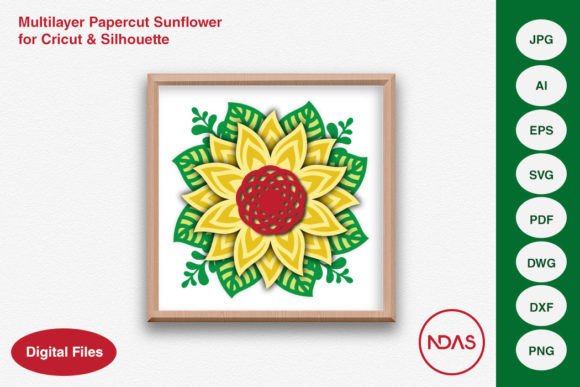
A Multilayer Sunflower Papercut File is not a physical product but a collection of vector and raster data designed to be processed by cutting machines or printers. The core value of this design lies in its segmentation. Unlike a single-piece cut that requires intricate internal supports, this file separates the sunflower into distinct components. Typically, the design features seven layers, allowing the creator to assemble the image with varying depths. This separation creates a 3D effect when the pieces are stacked, mimicking the natural layering of petals and leaves found in a real flower.
The file package is comprehensive, including formats such as AI, EPS, PDF, SVG, DXF, DWG, PNG, and JPG. This versatility ensures compatibility with a wide range of software and hardware. The standard size is defined as 10 × 10 inches in 2D space, though the digital nature of the product allows users to scale the dimensions up or down without losing vector quality. This scalability is a critical feature for projects ranging from small greeting cards to large wall art installations.
Primary Applications and Versatility
The utility of the Multilayer Sunflower Papercut File extends far beyond simple paper crafts. Its vector-based structure makes it an ideal candidate for several manufacturing processes:
- Papercutting and Cardstock Projects: The primary use case involves cutting colored cardstock, tissue paper, or patterned paper. By assembling the seven layers, crafters can produce high-relief artwork suitable for framing or display.
- Laser Cutting and Engraving: Because the file includes DXF and DWG formats, it is highly compatible with CO2 and fiber laser cutters. Users can cut through materials like plywood, MDF, and acrylic with precision.
- CNC Routing: Woodworkers and sign makers can utilize the design for routing decorative panels or furniture accents.
- 3D Printing: While less common than laser cutting, the layered structure can be adapted for 3D printing workflows where different heights represent different material extrusions.
Material Considerations
One of the significant advantages of this digital file is the breadth of compatible materials. Since the file dictates the cut path rather than the physical properties of the medium, the creative possibilities are vast. Common materials include:
Paper and Cardstock: These remain the most accessible options for hobbyists using home cutting machines. They allow for vibrant color layering and fine detail work.
Wood and MDF: For a rustic aesthetic, the file works well with thin sheets of birch plywood or Medium Density Fiberboard. The 7-layer design adds a tactile dimension that flat wood signs lack.
Plastic and Acrylic: Clear or colored acrylic sheets can create a modern, translucent interpretation of the sunflower. However, care must be taken regarding the thickness of the material to ensure the layers stack correctly without binding.
Metal: While possible with industrial-grade lasers, cutting metal usually requires thinner gauges to maintain the integrity of the small details in the petal layers.
Evaluating Benefits and Tradeoffs
When deciding whether to integrate the Multilayer Sunflower Papercut File into your workflow, it is important to weigh the benefits against the inherent tradeoffs.
Benefits
The most significant benefit is the ease of assembly. A single-layer sunflower design often requires holding tiny, fragile pieces together, which can be frustrating. By dividing the design into seven manageable sections, the assembly process becomes modular. Each layer acts as a frame or base for the next, providing structural stability to the final piece. Furthermore, the inclusion of multiple file formats (SVG, DXF, AI) ensures that users do not need to spend time converting files manually, saving valuable setup time.
Tradeoffs and Challenges
The primary challenge lies in the alignment process. To achieve a clean look, every layer must be perfectly centered and registered. If the user lacks a registration system or jigs, misalignment can ruin the symmetry of the sunflower. Additionally, the "7 layers" specification implies a certain level of complexity. For beginners, managing seven separate cuts and ensuring they fit together within a 10-inch square can be daunting compared to a single-cut design.
Another consideration is the material cost. Creating a multilayer project consumes more material than a single-layer version. If using expensive materials like premium cardstock or thick acrylic, the cost per unit increases. Finally, while the file is digital, the user must account for the time required to cut, weed, and assemble each component individually.
Situational Fit: Who Should Use This?
This digital file is a strong fit for intermediate to advanced crafters who value dimensional art. It is particularly useful for:
- Wedding and Event Decorators: The elegant nature of a sunflower mandala fits well with wedding backdrops, table centerpieces, and signage.
- Home Decor Enthusiasts: Those looking to create unique wall art that stands out from flat prints will find the 3D aspect appealing.
- Small Business Owners: Artisans selling laser-cut wooden signs or custom papercut invitations can leverage this design to offer a premium product with high perceived value.
Alternatives and Decision Making
While the Multilayer Sunflower Papercut File is robust, it may not be the optimal choice for every scenario. If your goal is rapid production of thousands of identical items, a single-layer die-cut might be more efficient due to reduced assembly time. Similarly, if you are working with very limited budget materials, the waste generated by cutting seven separate layers could be prohibitive.
For those seeking a completely flat aesthetic, a 2D mandala design without layers would be a better alternative. Conversely, if you require extreme durability for outdoor use, a single solid piece of metal or thick wood might be superior to a glued assembly of seven thin layers, which could potentially delaminate over time.
Conclusion
The Multilayer Sunflower Papercut File offers a sophisticated solution for creating dimensional floral art across paper, wood, and plastic. Its strength lies in its modularity and compatibility with a wide array of digital fabrication tools. However, success depends on the user's ability to manage alignment and their willingness to invest time in assembly. By carefully considering the intended material, the desired aesthetic, and the available equipment, creators can determine if this 7-layer design aligns with their specific project goals. For those seeking to add depth and texture to their work, this file represents a versatile and high-quality resource.